A beanie is a knitted tube closed at one end. That's genuinely all it is, and yet two beanies can look nothing alike on the same person. The difference comes from how deep the hat is, whether there's a cuff, and where it sits on your head.
The cuffed beanie
This is the classic. It's a straight knitted hat with the bottom edge turned up once, sometimes twice, so there's a double thickness of knit over your ears and forehead. That fold is where most of the warmth comes from, and it's usually where a label or patch goes.
It's also the easiest style to adjust. Pull it down to your eyebrows on a freezing morning. Push it back off your forehead for a looser look later in the day. Unfold the cuff and you've got a longer hat with a bit of slouch at the back.
The slouch beanie
A slouch beanie is longer than your head needs, and the spare fabric falls at the back. It's relaxed and a little scruffy, in a good way.
The trick is to put it on from the front. Set the edge on your forehead where you want it, then pull it back and let the extra length drop. Pull it on from the back and it ends up perched on top of your head like a sock.
Slouch beanies are the best choice for long hair, since there's room for it at the back, and they're the only style that copes with a bun or top knot without looking odd.
The bobble hat
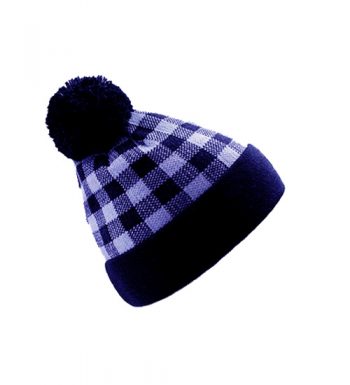
Put a pompom on top and you've got a bobble hat. Most are cuffed underneath, so they're warm, and the bobble adds height and a bit of fun. They're the most wintry looking of the lot and the hardest to take too seriously, which is half their appeal.
Bobbles come in knitted yarn, faux fur, or as a detachable ball on a popper. If you want to try the style, the Cream Shake Tag bobble beanie is in our New section.
The fisherman beanie
The fisherman beanie is short. It sits high on the head, stops above the ears, and usually has a chunky rib and a deep cuff. It takes its name from the knitted caps worn on boats and docks, and these days it's mostly worn because it looks good with short hair and a big coat.
It's the least warm of the four, since your ears are out in the cold. Treat it as a style hat for mild days rather than something for a freezing bus stop.
Matching a beanie to your face shape
None of this is law, and a mirror beats any guide. Still, a few patterns hold for most people.
- Round faces look good with some height on top, so a bobble or a slouch worn slightly back from the forehead.
- Long or narrow faces suit a cuffed beanie worn lower on the brow. Tall slouchy styles add length you don't need.
- Strong, square jaws are softened by a slouch with a bit of volume at the back.
- If your face is wider at the forehead and narrows to the chin, try a cuffed beanie sitting just above the eyebrows.
If you wear glasses, fold the cuff so it sits above the arms of your frames. Otherwise the hat presses them into the side of your head, and you'll feel it within an hour.
Matching a beanie to your hair
Hair matters as much as face shape. A fringe can be left out under the beanie or tucked away for a cleaner line. Both work, but pick one; half in and half out just looks like the wind got to it.
Short hair suits a fisherman or a snug cuffed beanie, because there's nothing to fill out a slouch. Long straight hair looks best down, with a slouch or a cuffed hat pushed slightly back.
Curly and afro hair can catch and frizz against some knits. A beanie with a satin lining helps, or you can wear a thin satin cap underneath your usual hat. Either way, don't pull it on too tight.
If you only want one
Pick a cuffed or slightly slouchy shape in a dark colour. Navy and black go with every coat you own. For a dark everyday hat, the Navy Milkshake Tag beanie keeps things simple, and a plain design like that works with most outfits. If you've already got a dark one and fancy something brighter, the Lime Summer beanie goes the other way entirely.
Looking after a beanie
Beanies mostly lose their shape in the drying. Check the care label first, since wool and acrylic behave differently. For most knits, hand wash in cool water with a gentle detergent, squeeze the water out rather than wringing it, and dry flat on a towel.
Never hang a wet beanie up, and never dry it on a radiator. The weight of the water drags the knit long, and the heat can shrink or felt wool. If the bobble is detachable, take it off before washing.
Store beanies folded in a drawer. Leaving one on a hook for months stretches the crown into a point.
Knitwear bobbles up where it rubs, and on a beanie that's usually the back, where it meets your collar or hood. A fabric comb or a battery shaver clears it in a minute. The same fixes work on jumpers and hoodies too, and our post on stopping a hoodie pilling goes into them properly.
One last thing: if you're going camping, pack a beanie even in summer. Our festival packing list explains why.
From the shop
Tees, hoodies, dresses and beanies, most with the Milkshake logo on them.
Browse the range